Best Private School Management Software in India
Built specifically for independent private schools with 200–10,000 students — without the module clutter or corporate bloat of platforms built for multi-city school chains.
One Office, Not a District
At a 400-student independent school, the same administrator often handles admissions, fee collection, and the front desk. Software must serve that reality — not a bureaucratic district office with dozens of departments.
Eliminating Useless Module Bloat
Most school ERPs stack on 30+ enterprise modules you never touch and force you to pay for all of them. EduOpus focuses purely on what standalone private schools actually need: automated fee collection, attendance, marksheets, and parent communication.
The Three Pillars of EduOpus for Private Schools
Designed from first principles to remove manual administrative burdens.
Native UPI AutoPay
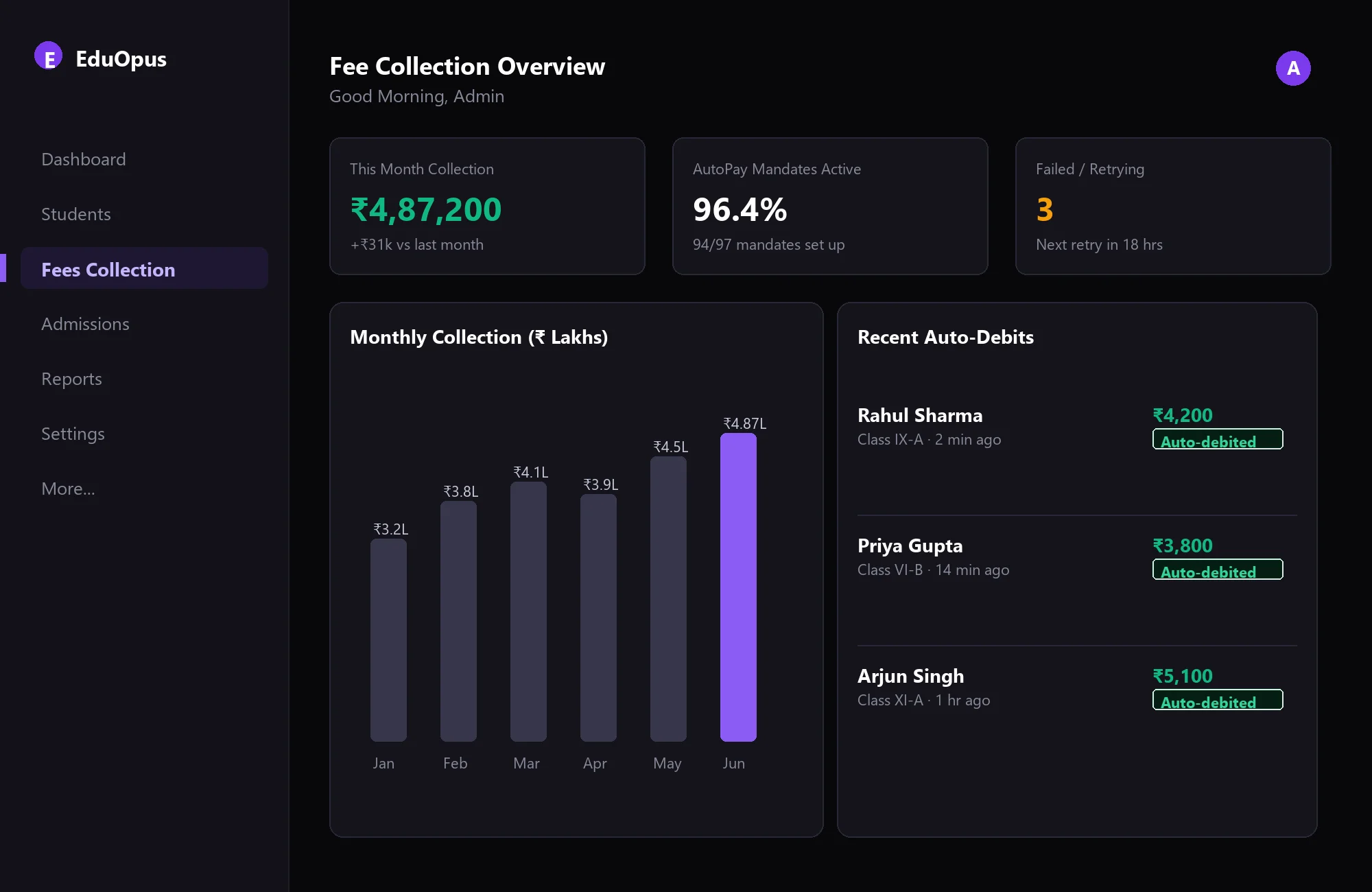
Parents authorize once in 45 seconds. Fees debit automatically on the scheduled due date. No payment links, no reminder messages, no clerk calls.
Zero-IT Onboarding
No dedicated IT administrator required. We migrate your historical student rosters and fee heads in 24 hours. Your team runs independently in week one.
Multi-Board Flexibility
CBSE, ICSE, or state boards — class-wise fee variations, lab fees, transport zones, and sibling concessions configure once and execute flawlessly.
EduOpus vs Generic School ERPs
Why independent schools thrive on EduOpus compared to unwieldy enterprise systems.
| Priority for Private Schools | Generic School Software | EduOpus Platform |
|---|---|---|
| Fee collection mechanism | Payment links requiring manual parent click every month | Native UPI AutoPay mandate — authorized once (45s) |
| Staff effort after setup | 30+ hours monthly chasing defaulters | Zero — collection and ledger update automatically |
| Onboarding timeline | Weeks to months with paid IT consultants | One week with zero IT overhead |
| Module relevance | 25–40 bloated modules, mostly untouched | Purpose-built for standalone private operators |
| Transparent Pricing | Opaque sales quotes + high setup & AMC fees | Flat ₹10/student/mo · Zero setup fee · Zero AMC |
Frequently Asked Questions
What is private school management software?
It is a digital platform built for the administration, fee collection, and parent communication needs of independent K-12 institutions, rather than large chains.
What makes EduOpus different from other private school management software in India?
EduOpus features native UPI AutoPay, allowing parents to authorize automatic monthly fee collections via UPI once, eliminating manual reminders and staff follow-up.
Is EduOpus suitable for a school with 200–300 students?
Yes, both our pricing (₹10/student) and our lean interface are designed specifically to support smaller teams without enterprise complexity.
How long does setup take?
Onboarding is completed in one week. We handle all historical data migration, and staff are typically operating the dashboard independently by week two.
Does it support multiple boards or fee structures?
Yes. CBSE, ICSE, or state board billing schedules and class-wise fee variations are configured once during onboarding and run automatically.
How much does it cost?
It costs a flat ₹10 per student per month, with no setup fee, parent app fee, or hidden module charges.
See AutoPay on a Real School Account
Book a 15-minute consultation to explore how EduOpus streamlines administration for your private school.